
Transportation Overview
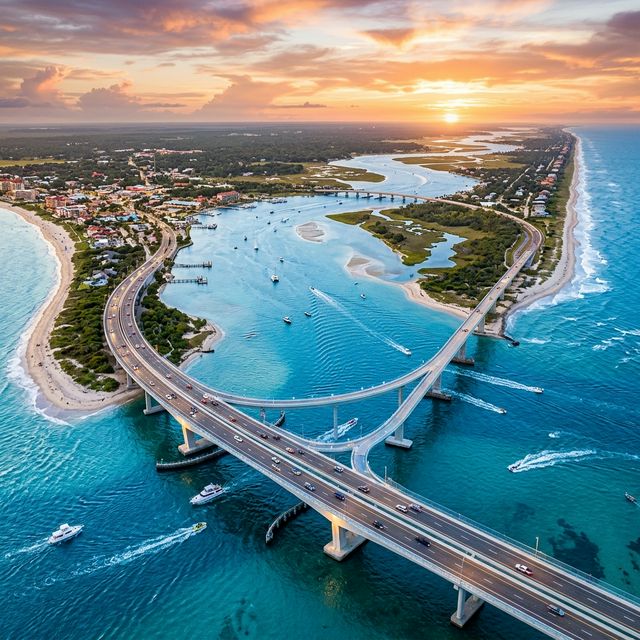
Transportation in Northeast Florida is centered around the Jacksonville metropolitan area. Most residents rely on personal vehicles for commuting, taking advantage of a region well-served by major highways, an international airport, public transit, rail connections, and access to major cruise ports. This excellent transportation access is a key reason the Jacksonville region continues to grow.
Major Highways and Regional Travel
The region is connected by an extensive highway network that makes commuting between communities relatively easy.
The primary north–south highway connecting Jacksonville to Georgia, South Florida, and the rest of the East Coast.
A major east–west corridor connecting Jacksonville to Tallahassee, Pensacola, and the rest of the Gulf Coast.
Jacksonville’s beltway that circles much of the metropolitan area and connects suburbs such as Orange Park, Fleming Island, and Arlington.
Major Commuting Corridors:
Jacksonville International Airport (JAX)
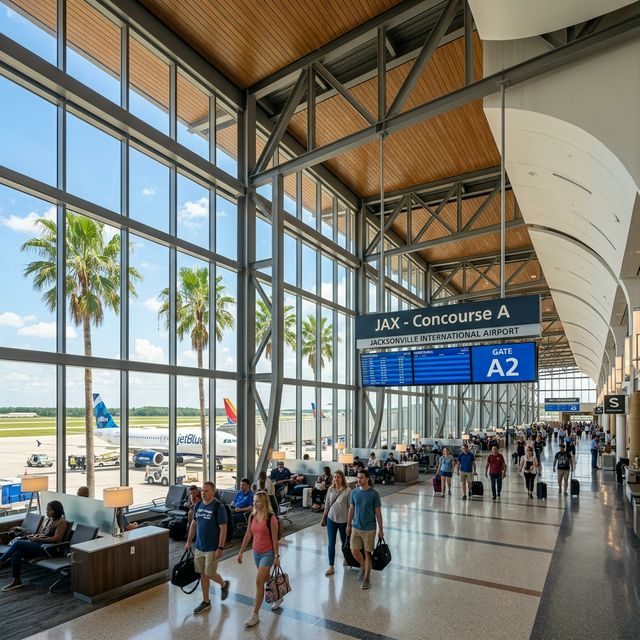
Located north of downtown Jacksonville, JAX is the region's primary airport. Serving major domestic destinations across the United States, Jacksonville International Airport provides convenient access for both business and leisure travel.
Easily Accessible From:
- Interstate 95
- Interstate 295
Public Transportation
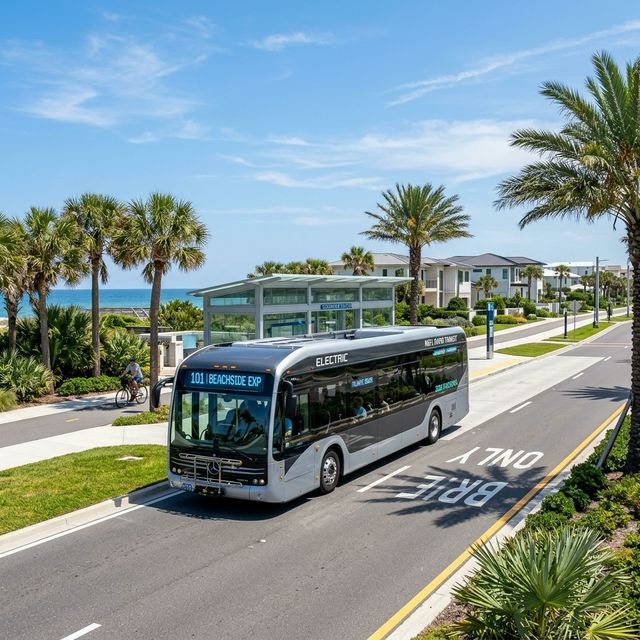
The Jacksonville Transportation Authority (JTA) operates the primary public transit system in the region. Public transit is most commonly used in central Jacksonville areas and near major employment centers.
JTA Services Include:
Rail Travel
Amtrak Passenger Rail
Amtrak operates passenger rail service from the Jacksonville station, connecting travelers to major cities including Washington DC, New York, Orlando, Miami, and New Orleans.
Amtrak Official WebsiteBrightline High-Speed Rail
Travelers can easily connect to the Brightline high-speed rail service in Orlando, which provides fast, premium service between Orlando, West Palm Beach, Fort Lauderdale, and Miami.
Brightline Official Website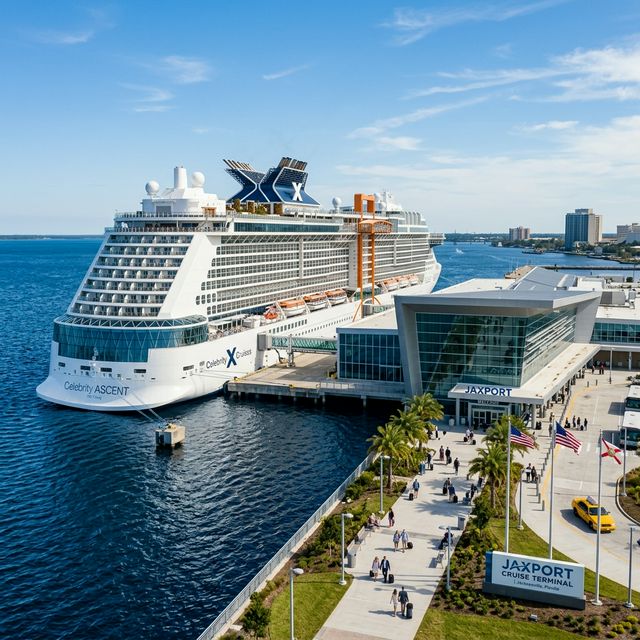
Cruise Ports
Northeast Florida residents have convenient access to major cruise departures for vacation travel.
JAXPORT Cruise Terminal
Jacksonville's homeport for Caribbean & Bahamas cruises — one of the easiest embarkation experiences in Florida.
Homeport Ships
Parking at JAXPORT
Fenced, well-lit surface lot directly adjacent to the terminal. Prepay online or pay on arrival. Cash and credit cards accepted. Free for FL disabled veteran plates.
From Jacksonville International Airport (JAX)
Head east from JAX toward I-95. Take I-95 South to I-295 South. Continue 6 miles to Exit 41. Turn right onto Zoo Parkway. Cross New Berlin Road, turn left on August Drive into the terminal.
- Located on the St. Johns River — you sail under the Dames Point Bridge at sailaway
- Single terminal — easy navigation, no confusion about which pier
- Operating as a cruise homeport since 2003 — 2+ million passengers served
- One of the most stress-free embarkation ports in Florida
- No cruise ship traffic on the ocean — river departure is unique and scenic
Port Canaveral
Located near Orlando, Port Canaveral is one of the busiest cruise ports in the United States. Many residents drive to Port Canaveral for Caribbean cruises, featuring departures from major international cruise operators.
Local Transportation Services
Residents and visitors also rely on widely available local transportation options throughout Jacksonville and the surrounding counties.
Commute Times and Driving
Most residents rely on driving for daily commuting. However, typical commute patterns in Northeast Florida offer travel times that are often much shorter than many other larger metropolitan areas.
Typical Commuting Patterns:
- 1Jacksonville suburbs to downtown
- 2St. Johns and Ponte Vedra to Jacksonville employment centers
- 3Clay County communities to Jacksonville
Transportation Tips for New Residents
Moving to a new region means learning new routes and patterns. Here are some practical tips to make traversing Northeast Florida easier.
Familiarize yourself with the major highways (I-95, I-10) and the I-295 beltway.
Use navigation apps during peak traffic hours to find the best routes.
Plan your routes efficiently for beach or downtown travel.
Understand the bridge crossings over the St. Johns River, as they can be major choke points during rush hour.